
Key Highlights:
- Singapore’s tropical climate makes air conditioning one of the largest contributors to household energy bills.
- NEA’s Tick Rating System rates aircons from 1 to 5 ticks, with 5 ticks indicating the highest efficiency.
- 5-Tick models consume significantly less electricity while maintaining strong cooling performance.
- Inverter technology, proper BTU sizing, and smart features are hallmarks of top-performing units.
- Choosing the best aircon in Singapore involves matching your space’s needs with the right energy class.
Introduction
Singapore sits just one degree north of the equator, keeping temperatures hovering between 25°C and 34°C throughout the year. Running an aircon is not a luxury here; it is a daily necessity for most households. That reality makes energy consumption a genuinely pressing concern, both for household budgets and environmental responsibility.
Electricity costs in Singapore rank among the highest in Southeast Asia. An inefficient aircon unit running eight hours a day can quietly push monthly utility bills to uncomfortable highs. Multiply that across years of ownership, and the financial gap between an average unit and the best aircon in Singapore becomes striking.
Energy-efficient models reduce electricity draw without compromising on cooling power. Choosing wisely at the point of purchase delivers savings that compound over the appliance’s lifespan, often covering the initial price difference within the first two years of use. Beyond personal savings, lower energy consumption supports Singapore’s broader sustainability goals, including its commitment to reducing carbon emissions under the Singapore Green Plan 2030. Selecting an energy-efficient aircon is one of the most practical ways households contribute to that national effort.
Learning the NEA Tick Rating System
The National Environment Agency (NEA) administers Singapore’s mandatory Energy Label scheme, which applies to all air conditioners sold locally. Each unit receives a tick rating ranging from 1 to 5, displayed prominently on a yellow label affixed to the product.
The rating reflects the unit’s Energy Efficiency Ratio (EER) or, for inverter models, its Seasonal Energy Efficiency Ratio (SEER). Higher ratios indicate greater cooling output per unit of electricity consumed. A 1-Tick model meets only the minimum regulatory threshold, while a 5-Tick model represents peak efficiency available on the market.
Consumers shopping for the best aircon in Singapore should treat the tick rating as a primary filter, not an afterthought. Many buyers focus on upfront costs and overlook running costs entirely. A 5-Tick unit priced slightly higher than a 2-Tick alternative frequently proves cheaper over three to five years of regular use. NEA updates its efficiency benchmarks periodically, so a model earning 5 ticks today reflects the current frontier of energy performance. Checking the label date alongside the tick count ensures the rating reflects contemporary standards rather than outdated benchmarks.
What Makes a 5-Tick Model Stand Out
5-Tick aircons consistently share several distinguishing characteristics that separate them from lower-rated alternatives. Understanding those traits helps buyers evaluate models critically rather than relying solely on marketing claims.
Inverter compressor technology sits at the heart of most 5-Tick units. Unlike fixed-speed compressors that switch fully on or off, inverter compressors modulate their speed continuously, matching output to the room’s actual cooling demand. Rooms reach target temperatures faster, and the compressor avoids the energy-intensive restart cycles that drive up consumption in conventional units.
High EER or SEER scores directly reflect real-world performance. Buyers seeking the best aircon in Singapore should compare these figures across shortlisted models rather than accepting tick counts alone as the deciding metric.
When it comes to finding the best aircon in Singapore, refrigerant type also plays a role. Most modern 5-Tick models use R32 refrigerant, which carries a lower Global Warming Potential than the older R410A standard and operates more efficiently at Singapore’s ambient temperatures.
Smart diagnostics and auto-clean functions further support efficiency by keeping the unit running optimally without frequent manual maintenance. A clogged filter forces the compressor to work harder, silently eroding efficiency over time.
Key Features to Look for in an Energy-Efficient Aircon

Choosing the best aircon in Singapore extends beyond chasing the highest tick count. Several practical features meaningfully affect long-term efficiency and comfort.
Correct BTU sizing ranks as the most overlooked factor. An undersized unit runs continuously without adequately cooling the space. An oversized unit short-cycles, switching on and off too rapidly to dehumidify the room properly. Either scenario wastes energy. Calculating the required BTU based on room size, ceiling height, sun exposure, and occupancy produces a far more accurate specification than simply buying the most powerful available unit.
Programmable timers and smart controls allow users to schedule cooling around actual occupancy patterns. Running an aircon in an empty room at full capacity is straightforwardly wasteful. Models offering app-based controls or integration with smart home systems give households granular control over consumption.
Sleep mode and auto-temperature adjustment features reduce cooling intensity during sleeping hours when the body naturally requires less aggressive temperature management. These modes meaningfully cut overnight consumption without disrupting sleep quality.
Air filtration quality contributes indirectly to efficiency. Units fitted with multi-layer filtration maintain cleaner coils over time, preserving heat exchange performance and reducing the load on the compressor. For those identifying the best aircon in Singapore, combining strong filtration with high tick ratings delivers both health and efficiency benefits in one purchase decision.
5-Tick Models Worth Considering in 2026
1. Daikin iSmileEco+ Series
- 5-Tick rated across the full R32 lineup
- Streamer Technology for air purification
- App-controlled via Daikin Mobile Controller
- Qualifies for NEA Climate Vouchers
Where to buy:
2. Mitsubishi Heavy Industries YVS / Rocket Series
- Jet Flow technology cooling up to 20 metres
- Nano Air Filter with 3D Auto airflow
- 5-Tick rated; estimated to reduce annual energy cost for System 4
Where to buy:
3. Panasonic XU Series
- 5-Tick rated with R32 inverter technology
- nanoe™ X inhibits airborne bacteria, viruses, and allergens
- Controllable via Panasonic Comfort Cloud App
Where to buy:
Making the Smart Choice for Your Home
Identifying the best aircon in Singapore involves matching specifications to the specific demands of each room rather than purchasing a single model for every space. Living areas with high sun exposure and frequent occupancy benefit most from 5-Tick inverter units with strong BTU output. Bedrooms, used primarily during sleeping hours, prioritise quiet operation and sleep mode functionality alongside efficiency ratings.
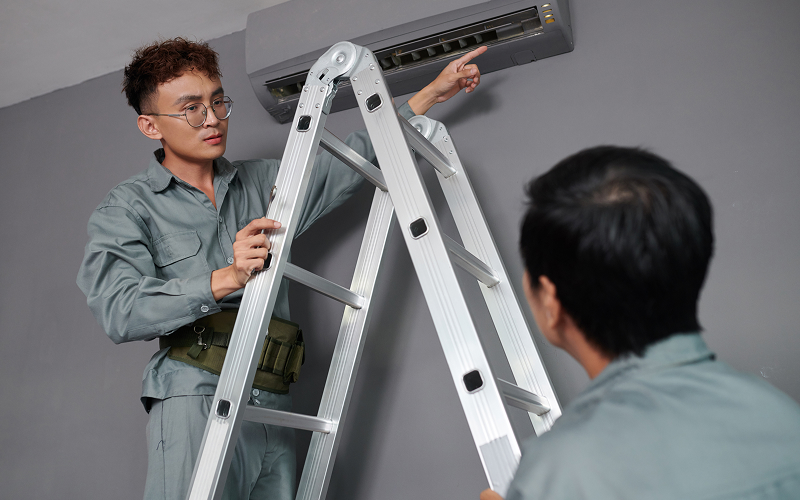
Professional installation matters as much as unit selection. Improper pipe routing, insufficient insulation, or poorly positioned indoor units compromise performance regardless of the model’s tick rating. Engaging a certified installer ensures the system operates as designed from day one.
On the other hand, regular aircon servicing, typically every three to four months in Singapore’s dusty, humid conditions, maintains efficiency over the appliance’s lifespan. Scheduling consistent maintenance protects the investment and ensures the unit continues delivering the energy savings promised by its 5-Tick rating.
Warranties and after-sales support also factor into the overall value calculation if you want to look for the best aircon in Singapore. A 5-Tick model backed by strong local service infrastructure offers greater long-term value than an equivalently rated unit with limited support coverage. Evaluating the total cost of ownership, including installation, servicing, and warranty coverage, alongside energy savings produces a genuinely complete picture of value.
ALSO READ: Why Good Aircon Servicing in Singapore Matters More Than You Think (And How It Saves You Money)
Frequently Asked Questions (FAQs)
Does a 5-Tick aircon cost more upfront?
Generally, yes. However, the energy savings accumulated over two to three years of regular use typically offset the higher purchase price, making it the smarter long-term investment.
Is a 5-Tick aircon always the best aircon in Singapore for every home?
Not automatically. Pairing the correct BTU capacity to room size matters just as much as the tick rating. An oversized 5-Tick unit in a small room still wastes energy through short-cycling.
How often should a 5-Tick aircon be serviced to maintain efficiency?
Every three to four months is the standard recommendation for Singapore’s humid climate. Neglecting servicing causes filter and coil buildup, quietly reducing efficiency regardless of the unit’s original tick rating.
Do 5-Tick models qualify for NEA Climate Vouchers?
Many do, but eligibility varies by model and retailer. Always verify directly with the retailer or check the NEA Climate Vouchers portal before purchasing.
Conclusion
Navigating Singapore’s aircon market with energy efficiency as the primary lens transforms a confusing purchase into a structured, rewarding decision. The NEA Tick Rating System provides a reliable, government-backed framework for evaluating performance, and 5-Tick models consistently deliver lower running costs, stronger environmental credentials, and superior long-term value.
Pairing the right tick rating with accurate BTU sizing, inverter technology, and professional installation positions any household to enjoy reliable cooling without watching electricity bills climb each month. The best aircon in Singapore is not simply the most powerful or the most affordable unit on the shelf. It is the one offering the most efficient performance for its specific operating environment, backed by consistent maintenance and capable servicing.
Make smarter decisions in your life! Head over to Best Picks for practical insights and well-researched tips covering everything that matters to modern living.